
Safety & Preparation
Access to remote environments requires planning, trained people, appropriate equipment and clear expectations.
Safety begins before departure.
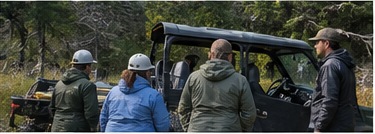
NBM's model treats transportation as a professional field operation. Participants are not being sold an off-road driving experience. The field vehicles exist to get people to places where observation and learning can occur.
Programs begin with a briefing and participant orientation. Drivers operate within defined procedures, routes are planned, conditions are evaluated, and communications and contingencies are considered before the group enters the field.
Driver Preparation
Trained drivers, role clarity, route familiarity and operating expectations.
Participant Briefing
Vehicle procedures, restraints, entering and exiting, field conduct and emergency expectations.
Route & Conditions
Weather, terrain, road or trail conditions, access limitations and turnaround decisions.
Communications
A communications plan appropriate to remote areas where normal cellular coverage may be unreliable.
Support Capability
Field support equipment and operational contingencies appropriate to the program.
Participant Needs
Program planning considers the practical realities of a mixed group spending a full day in a remote environment.
Additional safeguards for young participants.
The NBM Youth Field Experience will use a dedicated youth-protection and supervision framework in addition to NBM's normal field-safety procedures. NBM anticipates approximately one qualified adult chaperone for every three youth participants as a planning baseline, with final supervision requirements established according to participant ages, activities, field conditions, transportation requirements and partner or school requirements.
Guardian Authorization
Programs will require appropriate parent or guardian consent, emergency contacts, medical and allergy information, and transportation authorization.
Supervision
Participant check-in and check-out, adult-to-youth supervision, conduct expectations and safeguards governing adult interactions with minors will be established before program launch.
Age-Appropriate Operations
Routes, activities, equipment, restroom procedures, emergency planning and the pace of the day will be selected with the participating age group in mind.
Logistics Planned Around the Field Assignment
Remote field access may require more than transportation. NBM plans logistics around the location, participants, duration and conditions of the assignment. Depending on the program, this can include route planning, communications, equipment transport and storage, portable power, meals, sanitation planning, overnight sleeping arrangements and contingency support.
For partner-led activities, NBM's operational role complements—not replaces—the scientific, technical or environmental expertise supplied by the participating organization.