
See it. Ask about it. Understand why it matters.
The NBM Youth Field Experience brings young people into carefully selected natural environments where environmental lessons become things they can see, touch and discuss firsthand.
Like NBM's primary field programs, the youth experience is built around purposeful access rather than recreation. Each field day has defined learning objectives and planned observation stops designed to help students understand how natural systems, human activity and land-management decisions interact.
Build understanding that can grow into stewardship.
Environmental Literacy
Help young people recognize the connections among forests, water, wildlife, soils, trails, recreation, conservation and land management.
Firsthand Observation
Move beyond photographs and classroom descriptions by allowing students to observe real conditions in the places being discussed.
Critical Thinking
Encourage students to ask what they see, why conditions exist, what choices are available and how different decisions may affect a landscape over time.
Multiple Perspectives
Introduce the idea that environmental decisions can involve scientists, land managers, tribes, conservation organizations, recreation users, businesses, communities and others with different responsibilities and perspectives.
Responsible Access
Model preparation, respect for the landscape, appropriate trail and field behavior, and the responsibilities that come with access to natural places.
Stewardship
Give students practical reasons to care for the places they visit and understand how individual and collective choices can affect those places in the future.
The landscape becomes the classroom.
Forests & Wildfire
Forest health, fire, fuels, restoration, changing conditions and the choices involved in managing forest landscapes.
Watersheds & Water Quality
How water moves through a landscape, why healthy watersheds matter and how activities upstream can affect places downstream.
Wildlife & Natural Systems
Habitat, food, water, cover and the relationships between wildlife and the landscapes people also use.
Trails & Responsible Recreation
How trail systems are planned and maintained, how recreation affects natural areas and what responsible access looks like in practice.
Conservation in Practice
Age-appropriate observation or stewardship activities that connect what students learn to practical care for natural places.
Land Management
How people gather information, consider competing needs and make decisions that can shape a landscape for years to come.
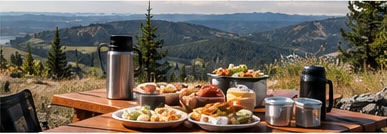
Lunch becomes part of the lesson.
The NBM Field Table remains an important part of the youth experience. After students have spent part of the day observing the landscape, lunch provides time to sit with educators, field professionals and chaperones and talk about what they have seen.
Discussion can ask students what surprised them, what they would do if they were responsible for the land, who might see the issue differently, and what today's choices could mean years from now. The objective is not to tell students what conclusion to reach. It is to help them learn how to observe, question, listen and think through environmental decisions.
Small groups. Close supervision. Age-appropriate planning.
Youth programs will operate under safeguards designed specifically for minors in addition to NBM's standard field-safety procedures.
Chaperone Planning
NBM anticipates approximately one qualified adult chaperone for every three youth participants as a planning baseline. Final ratios will reflect age, activities, field conditions, transportation and partner or school requirements.
Guardian Information
Appropriate consent, emergency contacts, medical and allergy information, transportation authorization and participant check-in and check-out procedures will be required.
Youth-Protection Procedures
Before launch, NBM will establish appropriate screening requirements, staff and chaperone conduct rules, safeguards for adult-minor interactions, restroom and medication procedures, and youth-specific emergency protocols.
Purposeful from departure to return.
Welcome & Orientation
Introduce the day's questions, field expectations, safety procedures and what students should watch for.
Travel Into the Field
Move as a closely supervised group with trained NBM personnel and appropriate field transportation.
Explore Field Stops
Get out, look closely, ask questions and connect environmental concepts to real conditions.
Hear From People Who Know the Place
Educators and appropriate subject-matter experts add scientific, historical, cultural or land-management context.
Youth Field Table
Share a field lunch and talk through observations while the landscape is still in front of the group.
Connect Learning to Responsibility
Discuss responsible access, practical stewardship and how today's choices can influence tomorrow's landscape.
Reflect & Take It Home
Return to base with closing questions, key observations and ideas students can carry back to school, family and community.
The next generation of stewardship begins in the field.
NBM intends to develop youth experiences with schools, youth organizations, conservation partners, tribes, agencies, educators and other organizations that share an interest in meaningful outdoor environmental education.
Discuss a Youth Program →